Detailed Description
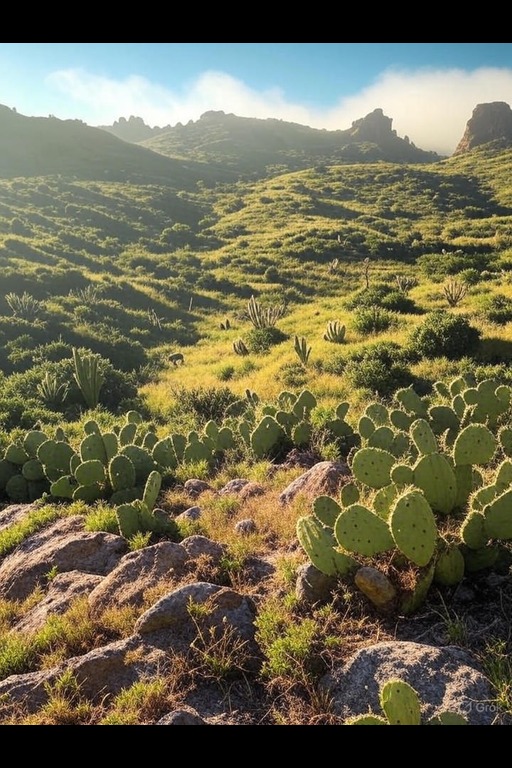
Xeric scrublands are defined by their extreme aridity and are commonly found in regions that receive less than 250 millimeters of rainfall annually. These biomes are characterized by a mosaic of low shrubs, succulents, and scattered grasses, which have adapted to conserve water and withstand the relentless sun. The soil is typically sandy or rocky, allowing for efficient drainage, which further shapes the types of vegetation that can thrive here. The flora often includes species such as sagebrush, creosote bush, and various cacti, each playing a vital role in the ecosystem by providing food and shelter for the local wildlife.
The fauna of xeric scrublands is equally adapted to the harsh conditions. Many creatures, such as the agile desert fox and the hardy jackrabbit, have developed behaviors and physiological traits that allow them to survive with minimal water intake. Reptiles, including various lizard species, bask on sun-warmed rocks during the day and retreat to burrows or crevices to escape the heat. Insects are abundant, with many species exhibiting remarkable resilience to temperature extremes and scarce resources, serving as a crucial part of the food web.
Weather in xeric scrublands is marked by stark contrasts. Days can reach sweltering temperatures, while nights may drop to near freezing. The skies are often clear, allowing the sun to beat down relentlessly during the day, but occasional storms can sweep through, bringing brief but heavy rainfalls that quickly saturate the parched earth. Such rain events are critical for plant life, triggering a burst of growth and blooming that can transform the landscape, if only for a moment.
Traveling through these regions can be a challenge due to the vast expanses and the lack of resources. Nomadic tribes may roam these areas, relying on their deep understanding of the land to find water sources and forage for food. Settlements, when they do exist, are often strategically located near oases or other water supplies and are constructed to minimize exposure to the elements, using mud brick or stone to create cool interiors. The sparse population allows for a sense of solitude, with the vastness of the scrubland stretching out in every direction, punctuated only by the occasional silhouette of a distant mountain range.
Overall, xeric scrublands present a unique blend of beauty and hardship, showcasing life’s resilience in the face of adversity. The interplay of flora and fauna, coupled with the striking landscapes and climatic extremes, creates an environment that is both challenging and awe-inspiring.
Examples
The sagebrush steppe is a dominant feature of many xeric scrublands, known for its aromatic foliage and ability to thrive in poor soil. These hardy shrubs often grow in dense patches, providing shelter for small mammals and birds that rely on them for nesting.
Creosote bush is another iconic plant of this biome, recognized for its distinctive scent after rainfall. This evergreen shrub has deep roots that tap into underground moisture, making it a vital resource for the local ecosystem, supporting various insects and small animals.
Desert tortoises, native to xeric scrublands, are well-adapted to the arid climate. They can store water in their bodies and have a slow metabolism, allowing them to survive long periods without food or water, showcasing the biome's unique adaptations.
In some regions, the xeric scrubland gives way to rocky outcrops that create microhabitats. These areas often host unique species of lizards and snakes that thrive among the crevices and ledges, hunting insects and small rodents.
Dust storms can sweep across the scrublands, particularly in dry seasons, obscuring visibility and reshaping the landscape. These natural phenomena are a reminder of the biome's harshness, affecting both wildlife and any travelers who dare to venture through.