Detailed Description
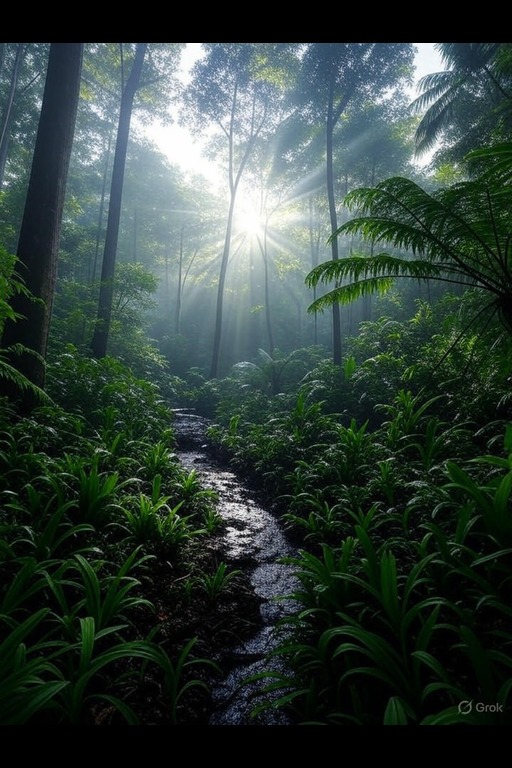
Tropical wet forests, often synonymous with rainforests, are among the richest ecosystems on the planet, characterized by their extraordinary biodiversity and dense vegetation. The climate of these forests is marked by consistently high temperatures and heavy rainfall, which creates an environment that is both humid and lush. Towering trees dominate the landscape, their trunks often entwined with vines and epiphytes, while the canopy forms a vibrant ceiling that filters sunlight into the lower layers of the forest. Beneath this green expanse, a stunning array of ferns, shrubs, and flowering plants flourish, creating a multi-layered habitat that supports countless life forms.
The forest floor is a realm of its own, often dimly lit and covered with a rich layer of decomposing leaves and organic matter. This layer provides essential nutrients to the diverse plant life, while also serving as a habitat for insects, fungi, and small mammals. The sound of rustling leaves and distant animal calls fills the air, creating a symphony of life that resonates throughout the forest. Many species, such as the vibrant poison dart frog or the elusive jaguar, have adapted to this unique environment, utilizing its resources for shelter and sustenance.
Traveling through a tropical wet forest can be both exhilarating and daunting. Adventurers must navigate through thick underbrush, often using machetes to clear a path. The air is thick with humidity, and the scent of damp earth and blooming flowers permeates the atmosphere. Rain can fall unexpectedly, drenching the landscape and transforming the forest into a shimmering oasis. Settlements are often sparse, with small villages or encampments located near clearings or rivers, providing access to essential resources while maintaining a delicate balance with the surrounding wilderness. The inhabitants of these areas, often skilled in herbalism and navigation, have a deep understanding of the forest's rhythms and its myriad secrets.
In addition to their ecological significance, tropical wet forests hold great cultural value for many indigenous peoples who have lived in harmony with these ecosystems for generations. Their knowledge of the land, its flora and fauna, and the cycles of nature is invaluable, providing insights into sustainable living practices that can help preserve these environments for future generations. The tropical wet forest is not just a habitat; it is a living tapestry of life, culture, and natural wonder, inviting all who enter to explore its depths and mysteries.
Examples
The Emerald Canopy: Towering trees stretch skyward, their leaves forming a thick green blanket that filters sunlight into dappled patterns on the ground. Below, a rich tapestry of ferns and flowering plants thrives, creating a vibrant undergrowth alive with color and movement.
The Whispering Stream: A crystal-clear stream winds through the forest, its banks lined with lush vegetation and vibrant orchids. The gentle sound of water flowing over stones mingles with the calls of birds, creating a serene atmosphere that invites travelers to pause and take in the beauty of their surroundings.
The Hidden Glade: A small clearing bathed in sunlight reveals a stunning array of wildflowers, their vibrant colors contrasting against the deep greens of the forest. This tranquil space serves as a sanctuary for butterflies and other pollinators, drawing them in with its sweet fragrances and bright hues.
The Canopy Walk: High above the forest floor, a network of rope bridges connects the upper branches of ancient trees. Adventurers traverse this aerial pathway, gaining a new perspective on the forest's sprawling beauty and the diverse life that thrives among the leaves.
The Nighttime Symphony: As dusk falls, the forest transforms into a realm of sounds. The calls of nocturnal creatures echo through the trees, while fireflies flicker like stars among the shadows, creating a magical atmosphere that captivates the senses.