Detailed Description
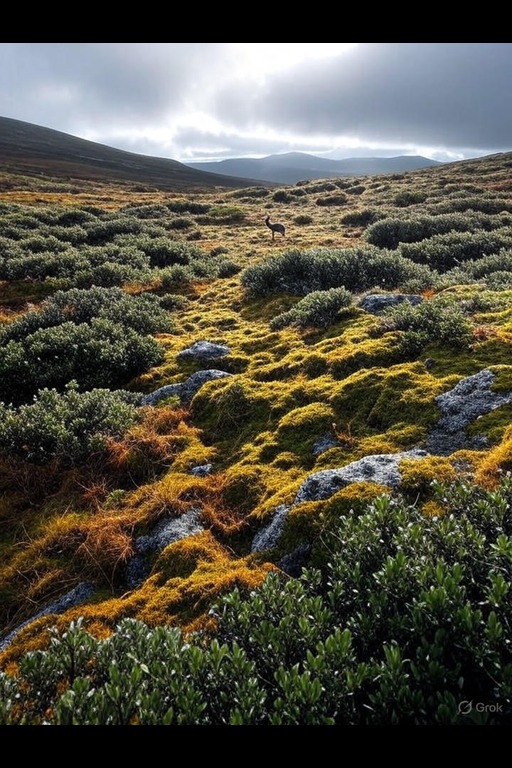
The subpolar scrub biome is a transitional zone found just below the tundra, often characterized by its rugged terrain and extreme weather patterns. The landscape is typically dotted with low shrubs, hardy grasses, and vibrant patches of moss, which blanket the ground like a green carpet. The soil is often rocky and poorly drained, making it difficult for larger plants to take root. During the brief summer months, when the sun shines brightly, the scrub comes alive with color as wildflowers bloom and insects emerge from their dormant state. However, as autumn approaches, the weather shifts dramatically, bringing with it the biting winds and snowfall that define the long winters.
Flora in this biome includes a variety of shrubs such as dwarf birch, willow, and various berry-producing plants. These resilient species have adapted to the cold and often nutrient-poor soil, developing deep roots to access moisture and nutrients. In addition to shrubs, the ground is often covered with a thick layer of moss and lichen, which help to insulate the soil and retain moisture during the dry months. This unique vegetation not only provides shelter for small animals but also plays a vital role in the ecosystem by preventing soil erosion and contributing to nutrient cycling.
The fauna of the subpolar scrub is equally specialized, with many species exhibiting remarkable adaptations to survive the harsh climate. Small mammals, such as lemmings and voles, burrow into the ground to escape the cold and find food, while migratory birds flock to the area during the summer months to take advantage of the abundant food supply. Predators, including arctic foxes and owls, can also be found in this biome, hunting for smaller creatures that inhabit the scrub. The interactions between these species create a complex web of life, highlighting the importance of each organism in maintaining the balance of the ecosystem.
Traveling through the subpolar scrub can be challenging due to its rugged terrain and unpredictable weather. Adventurers must be prepared for sudden snowstorms and cold temperatures, as well as the possibility of encountering wildlife. Settlements in this biome are sparse, often consisting of small, temporary camps established by hunters, gatherers, or researchers. These camps are typically constructed from local materials and designed to withstand the harsh conditions, providing shelter and sustenance for those who venture into this unique and unforgiving landscape.
Overall, the subpolar scrub is a biome of contrasts, where the beauty of life persists in the face of adversity. It stands as a testament to nature's resilience and adaptability, offering a glimpse into the intricate relationships that exist between flora, fauna, and their environment.
Examples
Dwarf Birch: This low-growing shrub is a common sight in the subpolar scrub, known for its ability to withstand harsh winds and cold temperatures. Its small leaves and resilient bark enable it to thrive in nutrient-poor soil, making it a vital component of the ecosystem.
Arctic Fox: A skilled predator, the arctic fox is well-adapted to the subpolar scrub, with thick fur that insulates against the cold. It preys on small mammals and birds, playing an essential role in maintaining the balance of the biome's food web.
Snowberry: This hardy plant produces clusters of white berries that can be a crucial food source for wildlife during the winter months. Its low stature and ability to thrive in poor soil make it a common feature of the subpolar scrub landscape.
Lichens: These resilient organisms form a crucial part of the subpolar scrub ecosystem, growing on rocks and soil. They help to break down materials, enriching the soil for other plants and providing food for various herbivores.
Migratory Birds: During the brief summer, various migratory bird species flock to the subpolar scrub to take advantage of the abundant food supply. Their presence adds vibrancy to the landscape as they nest and raise their young in this challenging environment.