Detailed Description
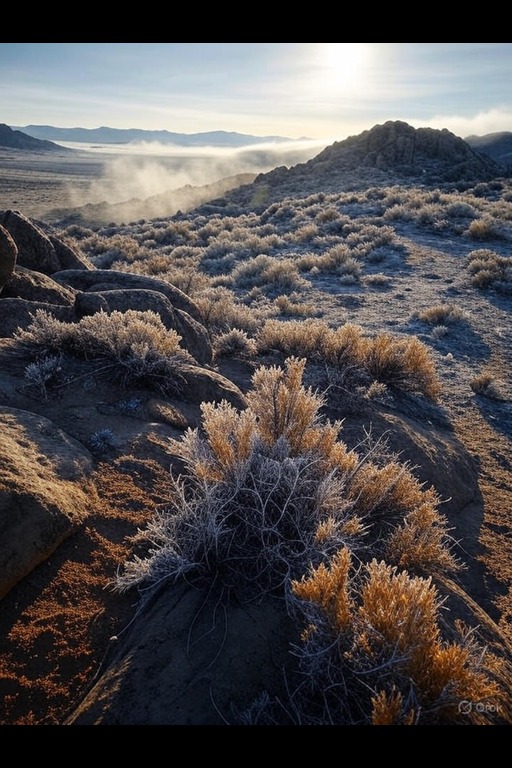
Cold deserts, often found in high-altitude regions or near polar areas, are defined by their unique climatic conditions. Characterized by low annual precipitation, these biomes can experience bitterly cold temperatures, especially at night when the sun sets, plunging the landscape into a deep chill. The terrain is typically a mix of gravel plains, rocky outcrops, and occasional sandy dunes, creating a rugged and stark beauty that can be both awe-inspiring and foreboding. The sky often looms overhead in a vast expanse, where clouds may be sparse, allowing for unobstructed views of the stars during the long nights.
Flora in cold deserts has adapted remarkably to survive in the challenging conditions. Vegetation is typically low to the ground, with hardy shrubs, lichens, and some grasses that can withstand both the cold and the aridity. These plants often exhibit deep root systems to access moisture from the soil, while their waxy surfaces help to minimize water loss. During the brief growing season, vibrant blooms may surprise travelers, bringing a splash of color to an otherwise muted landscape.
The fauna of cold deserts is equally fascinating, featuring species that have evolved to cope with the extreme temperatures and limited food sources. Small mammals, such as rodents and hares, thrive here, often utilizing burrows to escape the biting cold. Birds of prey can be seen soaring above, searching for their next meal, while insects and other invertebrates play crucial roles in the ecosystem, pollinating the sparse flowers and serving as a food source for larger animals.
Traveling through a cold desert can be challenging due to the drastic temperature changes and the need for careful navigation across its varied terrain. Adventurers must be well-prepared, with adequate supplies and knowledge of the land, as settlements are few and far between. Those who do venture into these desolate landscapes often find solace in the vastness, experiencing a profound connection to nature amidst the silence and isolation that pervades the air.
Examples
The Frosted Wastes are a well-known cold desert, characterized by shifting sand dunes and occasional snowdrifts that blanket the ground during winter. The area is home to resilient flora, including frost-resistant shrubs and hardy grasses that spring to life during the short summer months.
The Shivering Steppes, a remote cold desert located at the foot of towering mountains, features rocky outcrops and deep ravines. Its inhabitants, such as the nimble-footed snow hare and the elusive frost fox, have adapted to thrive in the harsh conditions, often seen darting between the sparse vegetation.
The Blighted Expanse, an arid region with stark, barren landscapes, is famous for its haunting beauty. Travelers may encounter hardy patches of lichen and moss that cling to life on the rocky surfaces, while the nights are illuminated by a brilliant display of stars, providing a stark contrast to the cold and desolation.
The Icy Barrens are a cold desert where strong winds sculpt the landscape into intricate patterns. The area is home to specialized insects and migratory birds that visit during the brief warmer months, bringing fleeting life to an otherwise inhospitable environment.
The Silent Dunes are a cold desert known for their eerie stillness and the occasional howl of the wind. Adventurers who traverse this region often find themselves captivated by the shifting sands and the resilience of life that manages to survive in such a harsh climate.